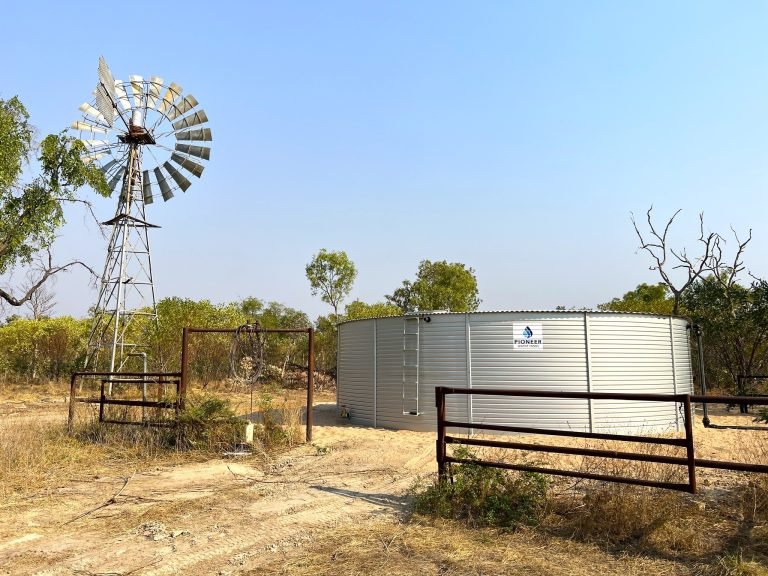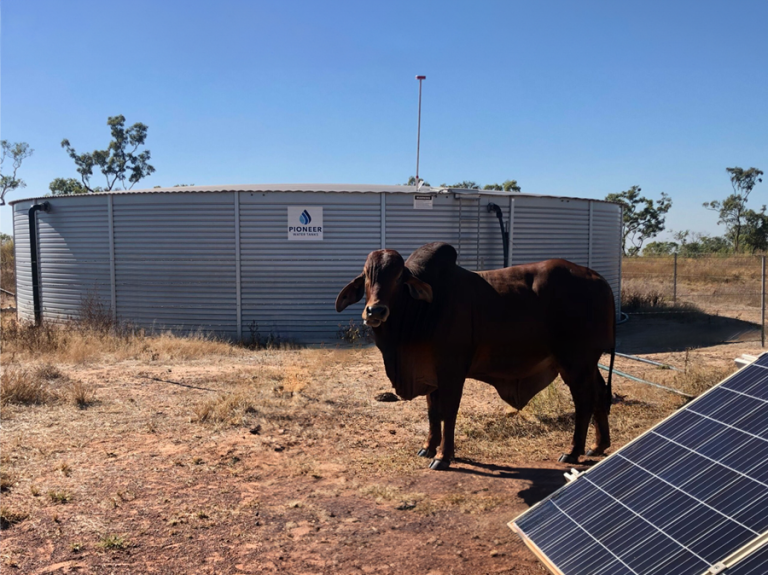


More than three million Australian homes have some form of rainwater tank, with over half a million homes relying on rainwater as the primary water source for their family. The remaining 2.5 million homes use their rainwater tank for drinking water, gardening, reticulation, laundry, and other minor uses.
This means that the right tank size varies for each household, depending on factors such as roof size, annual rainfall, household size, water usage, and the intended purpose of the tank.
For properties with limited space, slimline or flat design poly tanks are available to fit in tighter areas. For those with more space, large steel water tanks offer the best value, especially as tank size increases.
As a general rule, once you require more than one slimline or plastic tank to meet your storage needs, steel water tanks become the more cost-effective option.
There are a range of benefits and reasons people use rainwater tanks for, including:
Reduction or removal of water bills
Fresher tasting drinking water
Access to water for gardens year-round
No reliance on council or scheme water
Fire protection
Water for washing machines and laundry
Ability to move off-grid
Reducing stormwater runoff

Pioneer Water Tanks manufactures rainwater tanks for rural and semi-rural customers, offering sizes ranging from 12,000 litres to 500,000 litres. For this post, we will focus on rainwater tanks designed for the collection and storage of rainwater for the entire home.
The average Australian uses around 120,000L of water per year, but this figure is often skewed by high water users and doesn’t accurately reflect the typical family usage, which is usually much lower.
Pioneer Water Tanks recommends a starting size of 60,000 litres of storage for one person, with an additional 30,000 litres for each extra person in the household.
These figures are based on average usage, and additional storage may be necessary for families with animals, large gardens, or older appliances that consume more water than modern, water-saving designs.
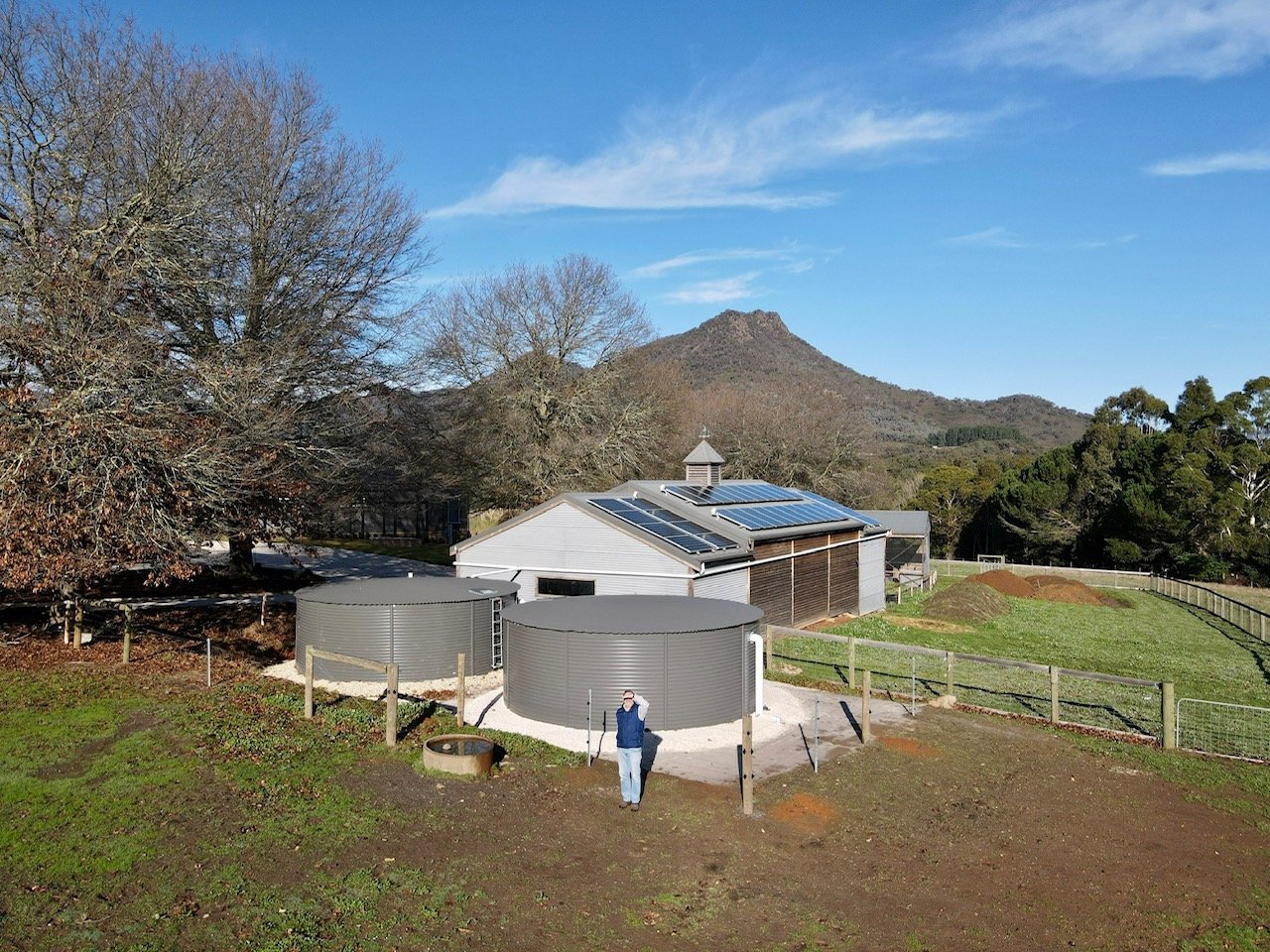
A great example of this is Pioneer customer Jamie Adamson, who initially installed a 60,000-litre rainwater tank on their property in Taggerty, believing it would meet their needs. However, after landscaping their gardens, they found they didn’t have enough water to sustain both their home and garden during the summer months.
Eventually, the Adamson family reached out to Pioneer and added a second GT60, boosting their total storage capacity to 120,000 litres—now fully meeting their water needs.
Equally important as determining how much water supply you need is understanding how much rainwater you can actually harvest. A tank much larger than your harvest capacity is unlikely to ever fill—unless it’s used for something like a holiday home.
The equation to calculate your rainwater harvesting potential is simple: multiply your annual rainfall (in millimetres) by your roof size (in square metres) to determine your annual rainwater harvesting ability in litres. Alternatively, you can use our rainwater harvesting calculator for a quick estimate.
To work out how much rainwater you can harvest from your roof (catchment area) use the simple calculator below:
For example, a family in Margaret River with a 200m² roof area would be able to harvest 193,000 litres of rainfall annually, based on an annual rainfall of 965mm (taken from the Bureau of Meteorology Witchcliffe site).
It’s important to note that this figure represents the total amount of water you can harvest in a year, not how large your rainwater tank needs to be. Since you’ll be using this water throughout the year, it won’t all fall at once.
If you have additional structures like a shed, patio, garage, or gazebo, you can also use their roofs as extra catchment areas for even more rainwater collection.
In the best-case scenario, you may find that you can harvest more rainwater than you actually need.
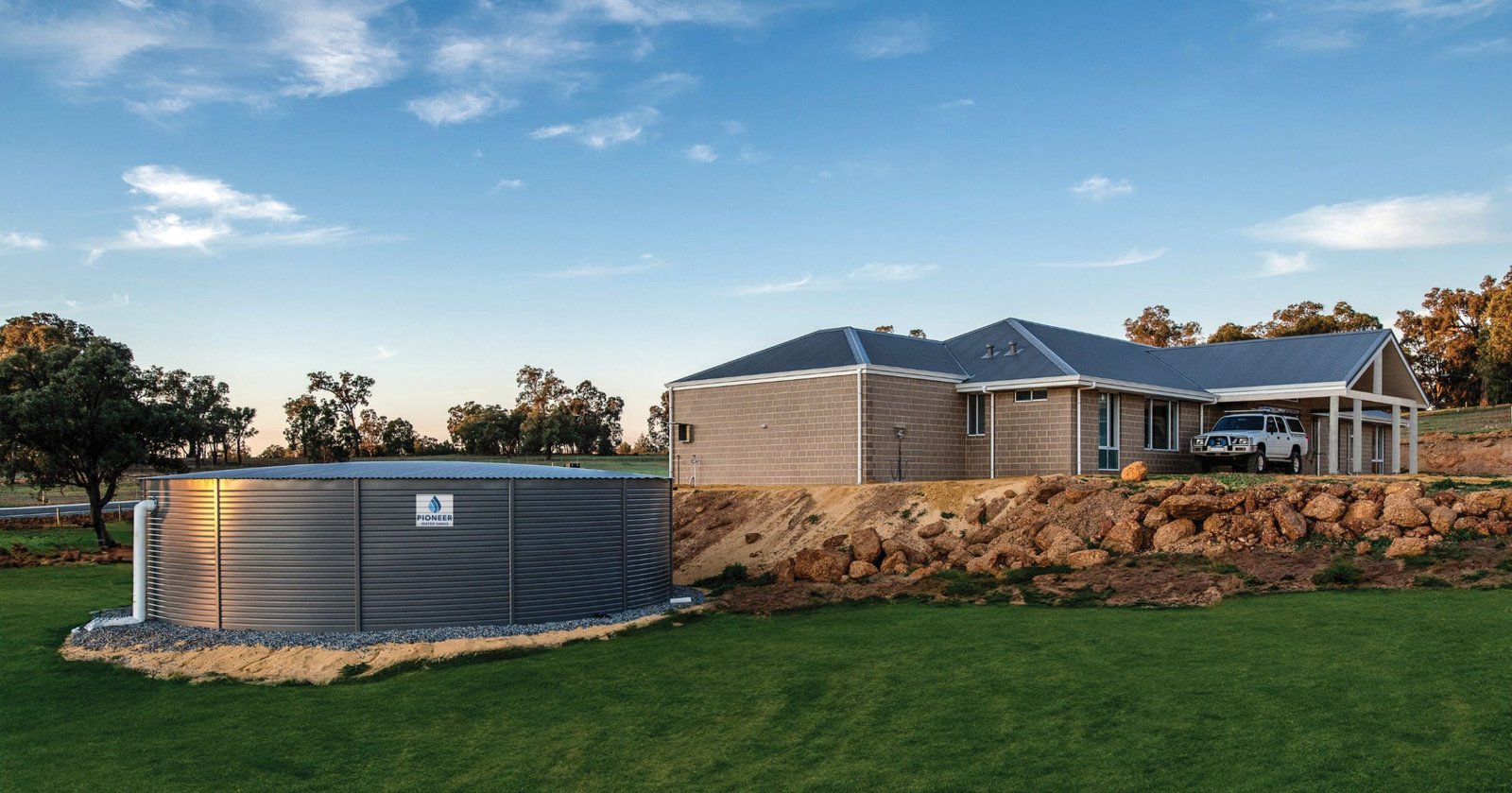
When Natalie and Andrew transitioned to off-grid living, no longer wanting to rely on mains water, they installed a GT200 water tank with 200,000 litres of storage for their home and garden.
However, after four years, they realised that while the tank size was sufficient for their needs, they were experiencing significant overflow, which Natalie felt was a waste.
They decided to return to their Pioneer dealer, Huckleberry Tanks, and purchased a second GT200, effectively doubling their capacity. This not only provided them with a substantial bushfire reserve, but also gave them the freedom to use their water as they pleased.
While your rainwater harvesting capacity will always be limited by factors such as the size of your catchment area and the annual rainfall at your property, there is one effective way to increase the volume of water you can capture.
Capture water directly from your tank roof with Smart Water Savers.
Smart Water Savers are an innovative water tank accessory designed by a member of the Pioneer family, allowing you to use your tank roof as an additional catchment area—without the drawbacks of traditional tank gutter systems.
The amount of water you can harvest will depend on the size of the tank you have installed, but it can be particularly useful if you find yourself falling short on water supply.
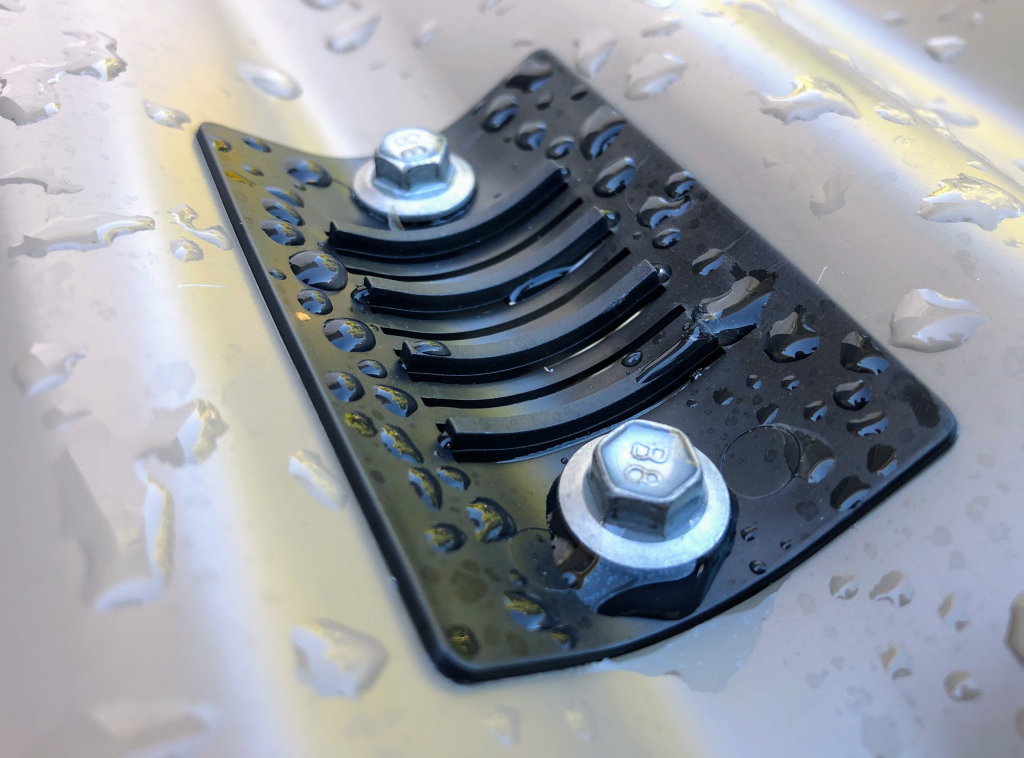
The GT110, our most common model, can expand your total rainwater harvesting area by an additional 50m², providing an extra 15,000 to 20,000 litres of stored water—even in regions of Australia with only a few months of wet weather per year.
Pioneer Water Tanks offers these Smart Water Savers, along with a range of standard and non-standard fittings and accessories, across our full selection of residential rainwater storage products.
When Spence and Kerrie decided to go off-grid in regional Victoria, they chose Pioneer Water Tanks and installed Smart Water Savers to ensure their 250,000-litre water tank would provide enough water during the summer months.
In some parts of Australia, there is a minimum water storage requirement for bushfire protection, intended for use by emergency services during a fire.
You can meet this requirement by installing a separate water tank on your property. However, if having two tanks in one location would take up too much space, Pioneer Water Tanks offers a more efficient solution.
Instead of installing a second tank, you can combine fire reserve and household water into a single system. This is achieved by placing the main outlet slightly higher up on the tank and the fire outlet at the base, ensuring there is always water available for firefighting.
Pioneer Water Tanks have been tested in fire conditions, and are the best choice for bushfire protection. You can read the articles by the Bushfire CRC here.
Pioneer Water Tanks has been manufacturing, supplying, and installing rainwater tanks across Australia for over 30 years, maintaining a leadership role in the water storage industry both nationwide and globally.
If you have any questions about your next rainwater tank or would like a quote or estimate from one of our expert dealers and installers, contact us today.
Our team of experienced water tank sales staff and installation experts are here to provide you with helpful advice on your water storage needs, no matter the requirements of your home or property.
For more information or pricing on world-class water storage solutions, call 0490 089 551 or fill out our form online, and NSW Water Tanks will be in touch shortly.